

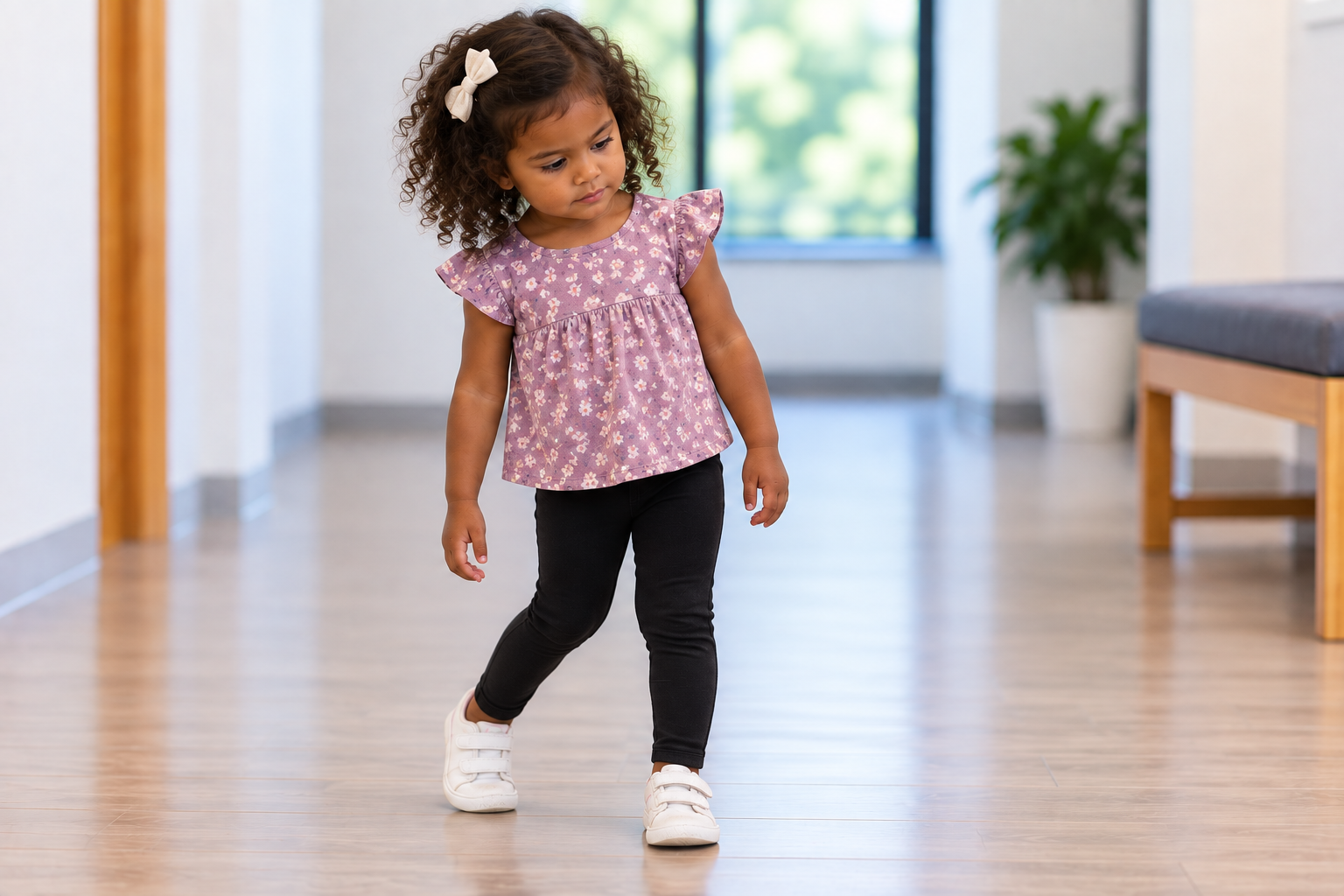
Persistent Limp: when it is a sign of healing and when it is problematic?
A limp that continues after an injury can be concerning for parents. While many children bounce back quickly, sometimes the body develops compensations that linger long after pain has improved. A persistent limp may signal that muscles, joints, or movement patterns haven’t fully recovered — and that’s where pediatric physical therapy can make a difference.

Out-Toeing in Kids
Out-toeing is when a child’s feet point outward instead of straight ahead while standing, walking, or running. Out-toeing is expected when children are learning to walk as this is a way to widen their base of support for more balance. As the child becomes a more confident walker, about 6 months after the onset of walking, some outward foot turn would still be considered normal during growth. When out-toeing it’s pronounced or affects balance, coordination, or comfort, however, a pediatric physical therapy evaluation can help.

In-Toeing In Kids: What It Is
In-toeing (often called “pigeon-toed”) is when a child’s feet point toward the midline of the body instead of straight ahead when they stand, walk, or run. It’s common in toddlers and young children and often improves as they grow.

Understanding Developmental Delays
Developmental delays occur when a child is not meeting expected milestones in areas such as motor skills, speech, social interaction, or problem‑solving. A delay does not mean a child won’t catch up—rather, it signals that they may benefit from early, targeted support to build the skills they need for everyday life.

Why should my child not sit in “W” position?
Children often W-sit because it gives them a wide base of support. This makes it easier to play without losing balance, especially for kids with:
Low muscle tone
Core weakness
Delays in balance or postural control
Sensory-seeking movement patterns
It’s a shortcut to stability, but one that can limit long-term motor development.